Research activities (Workpackages)

Research activities (Workpackages)

Activity 1: This activity includes (1) socio-economic assessment of the demand for euryhaline local fishes and of issues in the value chains; (2) Biological selection of candidate species; (3) Characterization of the genetic diversity of the selected species; (4) Establishment of optimal husbandry conditions: reproduction and induced spawning; (5) Establishment of optimal husbandry conditions: larval rearing; and (6) Establishment of optimal husbandry conditions: on growing to market size

Activity 2: This activity includes (1) Production cost assessment; (2) Market analysis; (3) Sensitivity and scenarios analysis; (4) Development of recommendations for specific target groups

Activity 3: This activity includes (1) Participatory Action-Research through tests in farms; (2) Knowledge exchange and liaison with extension services; (3) Communication strategy development; and (4) Dissemination of research results to users.

Activity 4: This activity includes (1) Ph.D. and MSc. supervision and training; (2) Promoting interdisciplinary knowledge exchanges; (3) Training on specific equipment and data analysis/specific training; and (4) Capitalization of lessons learnt and preparation of a manual

Project objectives

Project objectives

Overall objectives (expected impacts): The main overall objective is to contribute to the sustainability of the fish sector in Vietnam through better adaptation of fish farming. Thanks to the project, aquaculture will be better adapted to the growing and changing salinity, more diversified and therefore also less vulnerable to other risks (climate or market-related) and more economically viable. Strengthened sustainability and resilience of the fish sector will have positive socio-economic impacts in terms of fish consumption, employment and incomes.  It is also expected that higher adaptation of the aquaculture to salinity will mitigate water-related conflicts and safe water for other uses. Higher sustainability of farm fish production level should also mitigate the pressure on wild fish stocks (along with associated impacts on biodiversity and fuel consumption in fisheries). This is reflected in the attached theory of change. 

Specific objective (outcomes): Through those results the project will build and establish capacities or foundations for the sustainable and profitable development of the production of an euryhaline indigenous fish. In the light of current policies and existing or forecasted conditions at stakeholders’ level, it can be assumed that once achieved and combined, the results should indeed be sufficient to trigger and support next steps in the development of the expected value chain for the selected salt-tolerant species, following a theory of change to be detailed in the feasibility study.  

Expected results: to be produced by those activities consist of (1) availability of technical solutions on how to cost-effectively farm a local euryhaline fish meeting local demand; (2) availability of data, conclusions and recommendations in support to policies and decision-making for the development of the value chain of this species; (3) awareness and knowledge raising of producers and other key stakeholders on why and how to adapt fish production systems by adopting the euryhaline indigenous species (R3); and (4) increased capacities of Can Tho University (CTU) to conduct further research in the same field.

Diversification of Aquaculture Production in Relation to Global Change: The Case of the Domestication of Indigenous Euryhaline Catfish Species (Siluriformes) in the Mekong River Delta, Viet Nam

Diversification of Aquaculture Production in Relation to Global Change: The Case of the Domestication of Indigenous Euryhaline Catfish Species (Siluriformes) in the Mekong River Delta, Viet Nam

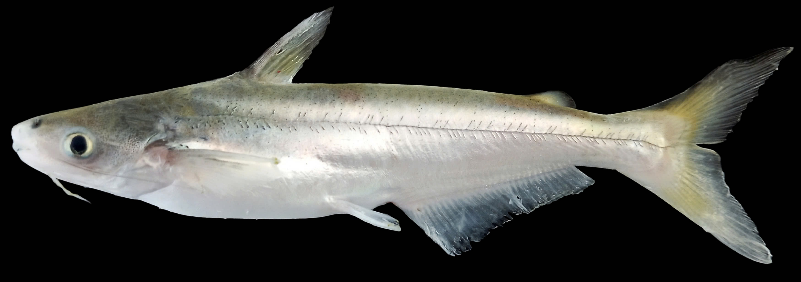
The Mekong River Delta, the heart of Vietnam’s aquaculture industry, is facing many challenges due to climate change, particularly salinity intrusion. In this context, this review aimed to assess the potential of indigenous euryhaline catfish species to diversify fish farming, strengthen food security, and build resilience in the region. Among the 1219 fish species recorded in the Lower Mekong Basin, 176 belong to the order siluriformes. Using a selection framework based on biological, ecological, market demand, and Aquaculture Readiness Levels criteria, 18 euryhaline catfish species were selected and analysed, with Pangasius krempfi, Pangasius mekongensis, Mystus gulio, and Plotosus canius emerging as the most promising candidates. These selected species are currently in the early phases of domestication and face key challenges. Of the four species, P. krempfi and P. mekongensis show high market value but are hindered by unreliable seed supply and significant knowledge gaps in breeding and other farming protocols. M. gulio appears as a promising candidate with already established reproduction techniques, though improvements in grow-out practices are required, while P. canius requires further research on artificial breeding and feeding optimization. For future developments, it is crucial to establish standardized hatchery protocols, broodstock management, improved farming practices, and species-specific formulated feeds. Additionally, as native species are locally consumed, implementing market-driven strategies is essential to increase profitability and ensure long-term sustainability

Contact

Contact

Get in Touch

Lorem ipsum dolor sit amet, consectetur adipiscing elit. Sed vitae justo nec nunc tincidunt vehicula. Vivamus ac ex non eros ultricies tincidunt. Integer convallis, justo at mattis sagittis, ligula augue porta enim, a egestas elit velit vel magna.

Contact Information

Address: Lorem Street 123, Ipsum City, Dolor Country
Phone: +123 456 7890
Email: contact@loremipsum.com
Working Hours: Monday – Friday: 8:00 AM – 5:00 PM

Fish Database

Fish Database

Explore Our Extensive Fish Collection

Lorem ipsum dolor sit amet, consectetur adipiscing elit. Sed do eiusmod tempor incididunt ut labore et dolore magna aliqua. Curabitur ac felis nec justo efficitur fringilla. Vivamus et velit a sapien tempor dictum.

Featured Species

Species 1 – Lorem piscis

  • Habitat: Freshwater rivers and lakes

  • Size: 30-50 cm

  • Description: Sed ut perspiciatis unde omnis iste natus error sit voluptatem accusantium doloremque laudantium, totam rem aperiam.

Species 2 – Dolor fluvialis

  • Habitat: Brackish estuaries

  • Size: 15-25 cm

  • Description: Ut enim ad minima veniam, quis nostrum exercitationem ullam corporis suscipit laboriosam, nisi ut aliquid ex ea commodi consequatur.

Species 3 – Aqua magna

  • Habitat: Coastal waters

  • Size: 50-80 cm

  • Description: Duis aute irure dolor in reprehenderit in voluptate velit esse cillum dolore eu fugiat nulla pariatur. Excepteur sint occaecat cupidatat non proident.

Species 4 – Piscis novus

  • Habitat: Deep freshwater lakes

  • Size: 20-40 cm

  • Description: Lorem ipsum dolor sit amet, consectetur adipiscing elit. Sed do eiusmod tempor incididunt ut labore et dolore magna aliqua.

Species 5 – Fluvius rex

  • Habitat: River basins

  • Size: 60-100 cm

  • Description: Curabitur vel sapien eu libero commodo dignissim. Morbi non urna vitae ligula vestibulum placerat.

Search and Filter Functionality

Lorem ipsum dolor sit amet, consectetur adipiscing elit. Phasellus sed odio ut libero convallis tincidunt. Vivamus consequat sem at justo placerat, vel elementum mi tincidunt.

Search by Name: [_________________] [Search]
Filter by Habitat: [All ▼] [Freshwater] [Brackish] [Saltwater]
Filter by Size: [All ▼] [Small <30cm] [Medium 30-60cm] [Large >60cm]

Additional Information

  • Conservation Status: Lorem ipsum dolor sit amet, consectetur adipiscing elit.

  • Feeding Habits: Sed do eiusmod tempor incididunt ut labore et dolore magna aliqua.

  • Reproduction: Ut enim ad minim veniam, quis nostrud exercitation ullamco laboris nisi ut aliquip ex ea commodo consequat.

Explore More

Lorem ipsum dolor sit amet, consectetur adipiscing elit. Vestibulum vitae risus vitae nisi consequat imperdiet. Curabitur fringilla metus ut sapien sollicitudin, at feugiat odio scelerisque.

Publications

Publications

Diversification of Aquaculture Production in Relation to Global Change: The Case of the Domestication of Indigenous Euryhaline Catfish Species (Siluriformes) in the Mekong River Delta, Viet Nam

The Mekong River Delta, the heart of Vietnam’s aquaculture industry, is facing many challenges due to climate change, particularly salinity intrusion. In this context, this review aimed to assess the potential of indigenous euryhaline catfish species to diversify fish farming, strengthen food security, and build resilience in the region. Among the 1219 fish species recorded in the Lower Mekong Basin, 176 belong to the order siluriformes. Using a selection framework based on biological, ecological, market demand, and Aquaculture Readiness Levels criteria, 18 euryhaline catfish species were selected and analysed, with Pangasius krempfi, Pangasius mekongensis, Mystus gulio, and Plotosus canius emerging as the most promising candidates. These selected species are currently in the early phases of domestication and face key challenges. Of the four species, P. krempfi and P. mekongensis show high market value but are hindered by unreliable seed supply and significant knowledge gaps in breeding and other farming protocols.

Read More »

Our Partners

Our Partners

Our Partners

Lorem ipsum dolor sit amet, consectetur adipiscing elit. Sed do eiusmod tempor incididunt ut labore et dolore magna aliqua.

Partner 1 – Lorem ipsum dolor sit amet, consectetur adipiscing elit.
Partner 2 – Sed do eiusmod tempor incididunt ut labore et dolore magna aliqua.
Partner 3 – Ut enim ad minim veniam, quis nostrud exercitation ullamco laboris nisi ut aliquip.

Become a Partner

Lorem ipsum dolor sit amet, consectetur adipiscing elit. Curabitur euismod, nisl vel tincidunt sagittis, lacus quam facilisis lectus, sed lacinia purus lorem at nulla.